The government has suspended its directive requiring airlines to offer at least 60% of seats on flights without additional charges, following industry concerns about the impact on fares and pricing structures.

Suzuki Motorcycle India Ltd (SMIPL) has revised its domestic two-wheeler sales growth estimate for FY27 downwards from 7-8 per cent, citing rising commodity costs due to the ongoing West Asia conflict and its impact on consumer affordability.

'It would be similar to what happened during COVID-19.' 'They are not just losing income, but being pushed into distress.'
Events from mid-2025 to early 2026 exposed deeper systemic concerns for India's aviation safety architecture.

Pilots and aircraft maintenance engineers are responsible for planning and conducting flights, and these decisions must rely on technical judgment rather than external influence.
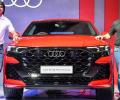
German carmaker Audi plans to reassess and adjust its product launch strategy in India once the specific details of import duty reductions under the India-EU free trade agreement (FTA) become clear, according to Balbir Singh Dhillon, the brand's director in India.
IndiGo airline will face near-term pressure on profitability from rising fuel prices following the escalation of conflict in West Asia, though it is likely to pass on higher costs to passengers over time because its ticket booking cycle is relatively short, according to a report by Moody's Ratings.
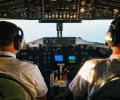
'Extending 'flight duty period' and 'flight time' limits for minimum crew complement operations increases exposure to fatigue-related performance degradation'

The Federation of Indian Pilots, said the union has written to the DGCA raising concerns over the extension.

Under the proposal, if a foreign carrier does not operate flights to a particular Indian airport for 'four consecutive IATA seasons', the regulator may suspend that airport authorisation.
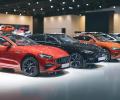
Passenger vehicle (PV) sales growth in India is expected to moderate to 3-5 per cent year-on-year (Y-o-Y) in financial year 2027 (FY27) due to a high base and preponed replacement demand, according to a report released by India Ratings and Research on Thursday.
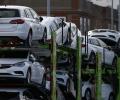
The production-linked incentive (PLI) scheme for the automobile sector has created market distortions, excluded innovation-led electric two-wheeler (e2w) makers, and failed to convert cost advantages into export competitiveness, with 77 per cent of export volumes driven by non-PLI models, said a report released by the Centre for Domestic Economy Policy Research (C-DEP) on Friday.

French automotive component maker Valeo on Wednesday said it will invest over Rs 2,150 crore in India and treble its annual sales in the country to around Rs 7,510 crore by 2028.

JSW MG Motor India will launch four new models this year, and is planning to invest between 3,000 crore-4,000 crore in the country over the next couple of years. The new models include a plug-in hybrid, an electric vehicle, the Majestor SUV and one additional model yet to be disclosed.
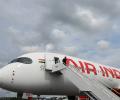
'We have been insisting that all Boeing 787 aircraft be grounded and checked for the electrical systems.'

At present, e-mobike penetration in India is close to negligible, unlike the scooter segment, where electric scooters account for nearly 20 per cent of sales.
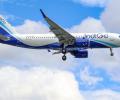
'During the meeting with DGCA on Monday, IndiGo assured operational stability and no flight cancellations after February 10, 2026, based on the current approved network, above (sufficient) crew strength.'

IndiGo has informed DGCA that 'all refunds for IndiGo flight cancellations during the period of December 3-5 have been fully processed and cleared to the original source of payment.'
Three additional vehicle makers and five more auto component makers will begin availing financial incentives under the production-linked incentive (PLI) scheme for the automobile sector from 2026-27 (FY27) onwards, Hanif Qureshi, additional secretary at the Ministry of Heavy Industries (MHI), said on Wednesday.

The partnership strengthens HMC's presence in global cricket, marking its return to the sport after its earlier association with the ICC between 2011 and 2015.
